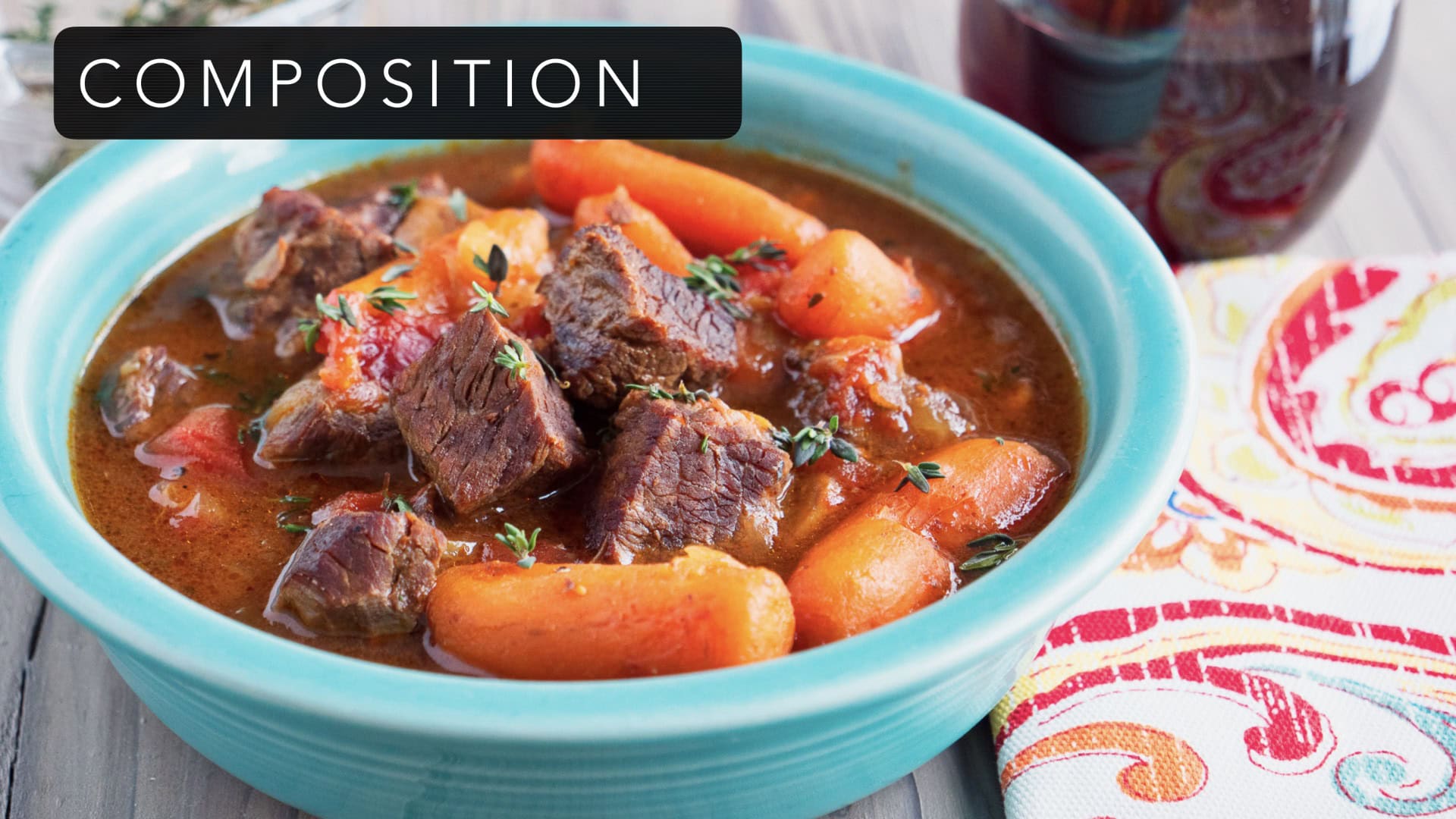
Composition is how we arrange the objects in the frame of our photo.
Composition is almost as important as lighting. Food photographers don't have the most exciting subject. This photography isn't Fashion photography with a beautiful model, epic landscape shots of cliffs and waterfalls, or thrilling wildlife photos of bears catching a salmon in their teeth. All we have is what's on the table, and we have to make it look good.
Balanced vs Unbalanced Composition
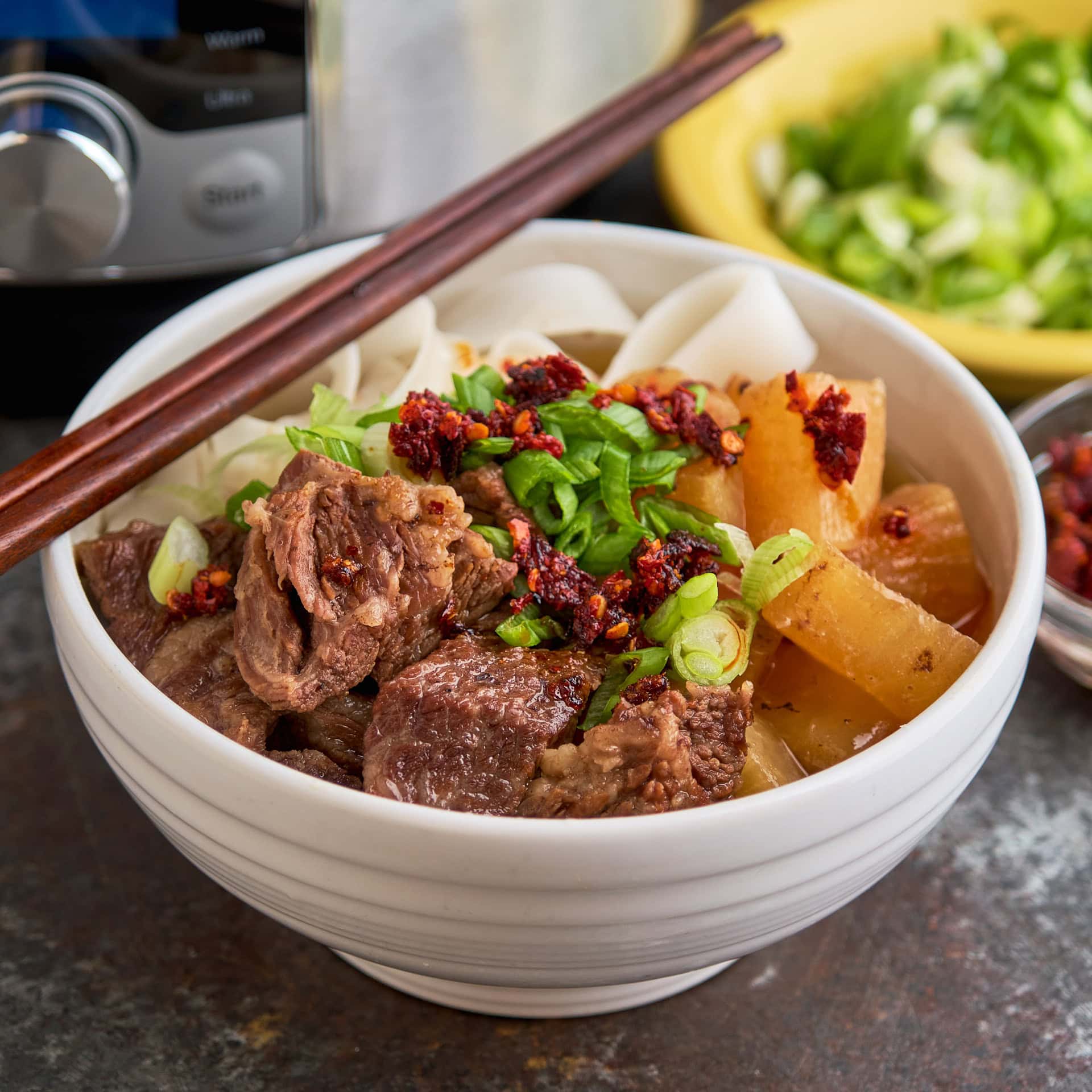
How do we position the main subject in the frame?
- Balanced composition is solid
- Unbalanced composition adds motion and interest.
I use balanced photos for my hero shots because they are for the web or social media, where they are automatically cropped. I don't want the hero to get cropped out of the photo.
I use unbalanced photos for most of the rest of my food photography. How do you unbalance a photo to look good and not just unbalanced? Let me introduce you to the Rule of Thirds and the Golden Spiral.
The Rule of Thirds and the Golden Spiral
The Rule of Thirds and the Golden Spiral are unbalanced compositions that look "right" to the human eye. They are patterns found in nature, so we recognize the pattern, even if we're unaware. Use one of these two rules for your unbalanced pictures if you can.
The Rule of Thirds
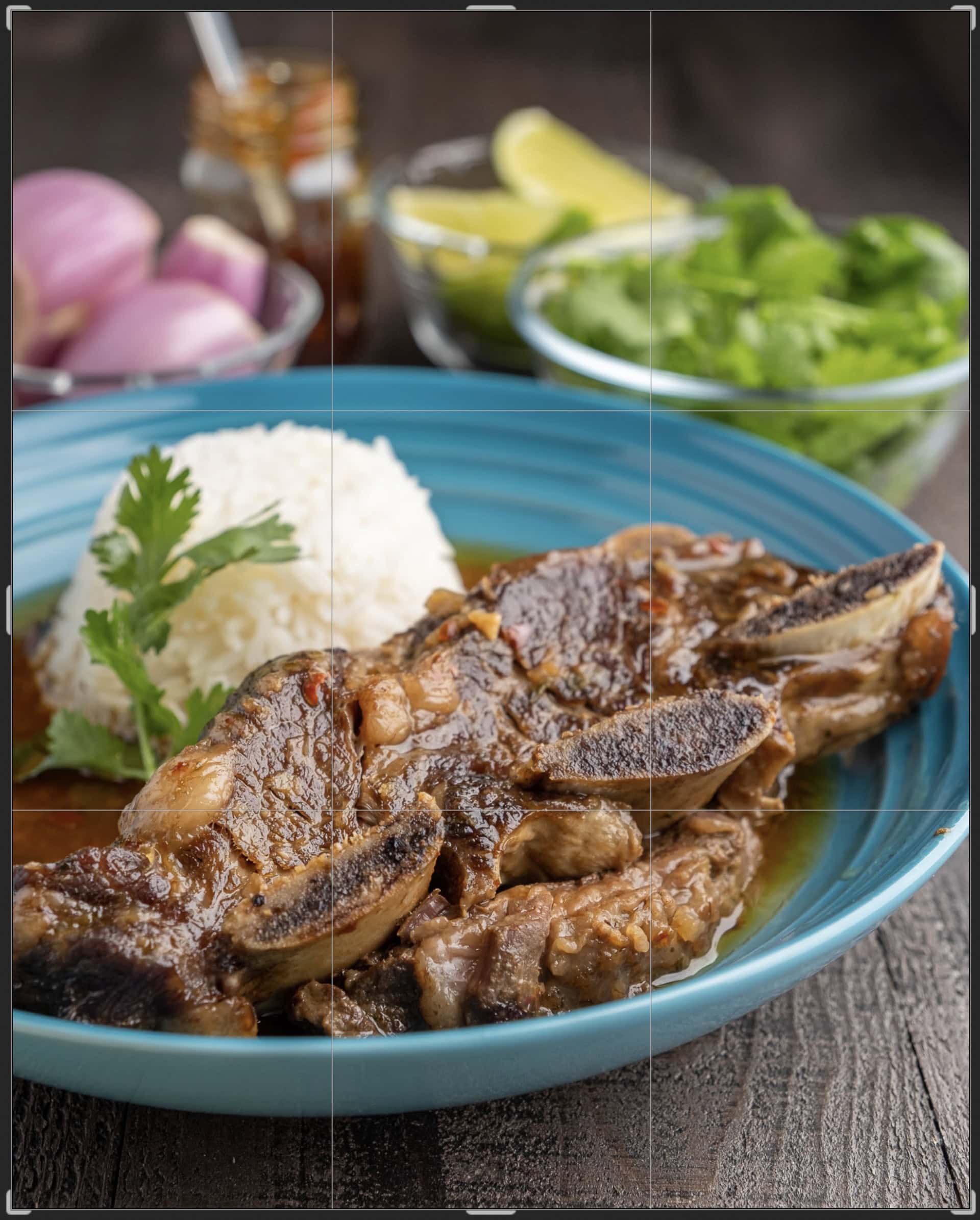
If you divide the frame into equal thirds, top to bottom and side to side, you'll get a rule of thirds grid.
To use the rule of thirds, place the main subject on one of the lines or, even better, at one of the intersections. If I have multiple elements, I try putting them on a line that intersects the corner points of the rule of thirds lines. This makes a line that leads the eye to the two crossing points.
Most cameras let overlay a rule of thirds grid over the viewfinder, and almost all editing software will show it, especially when using a crop tool.
But, if I have multiple elements, that's where I turn to the Golden Spiral.
The Golden Spiral
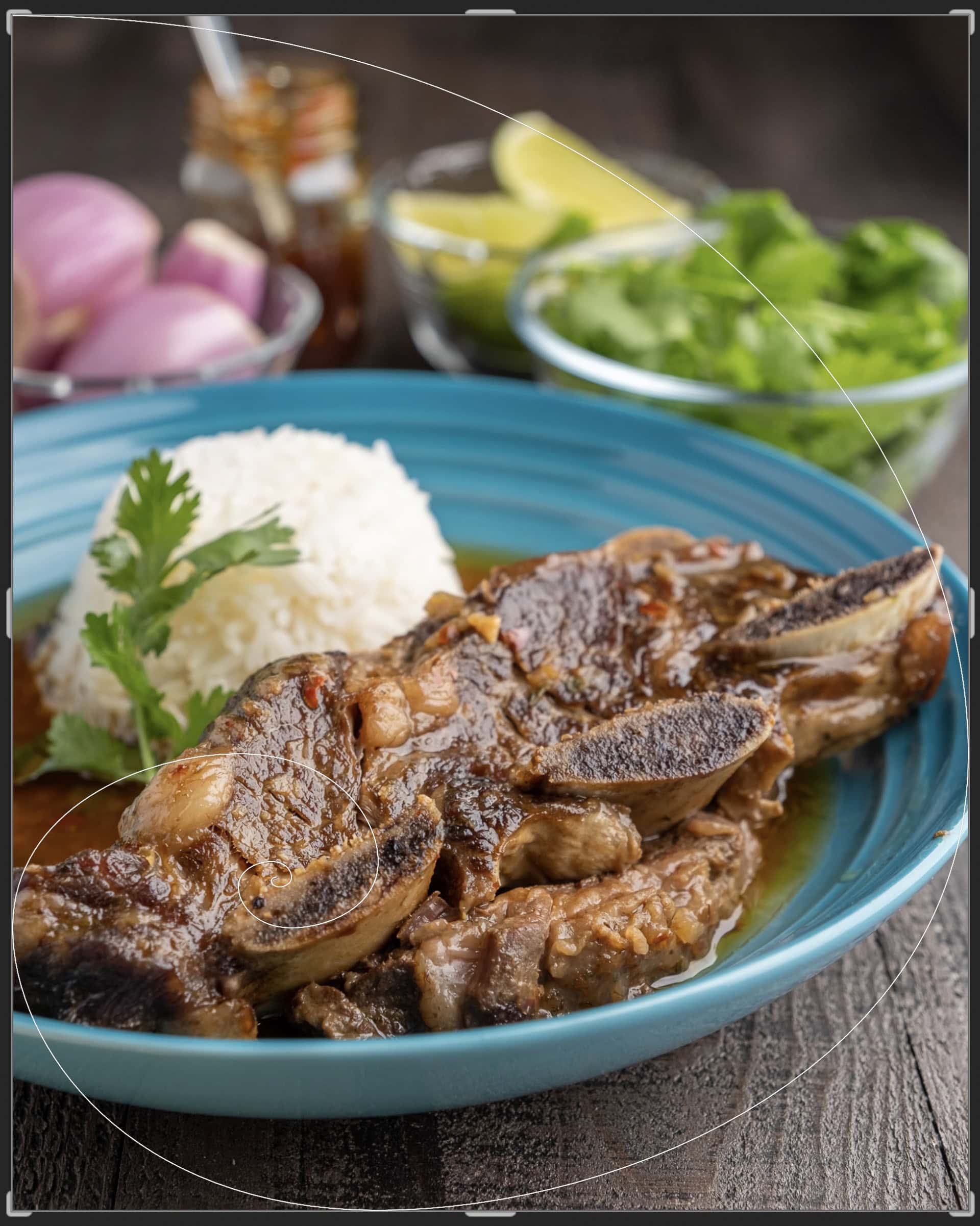
The golden spiral is hard to explain with words. "It is a logarithmic spiral with whose growth factor is the golden ratio", according to Wikipedia.
It's easy to understand once you see it because we see it everywhere in nature. The spiral of a nautilus shell, the curve of a crashing wave, the seeds of a pine cone, and the shape of a hurricane are all golden spirals.
A golden spiral leads the eye into and out of the picture, so I use the center of the spiral to draw the eye to the key part of the picture. Then I place the other subjects along the spiral so the eye follows them out and back in.
And, while we're talking about leading the eye, let's talk about leading lines.
Leading Lines
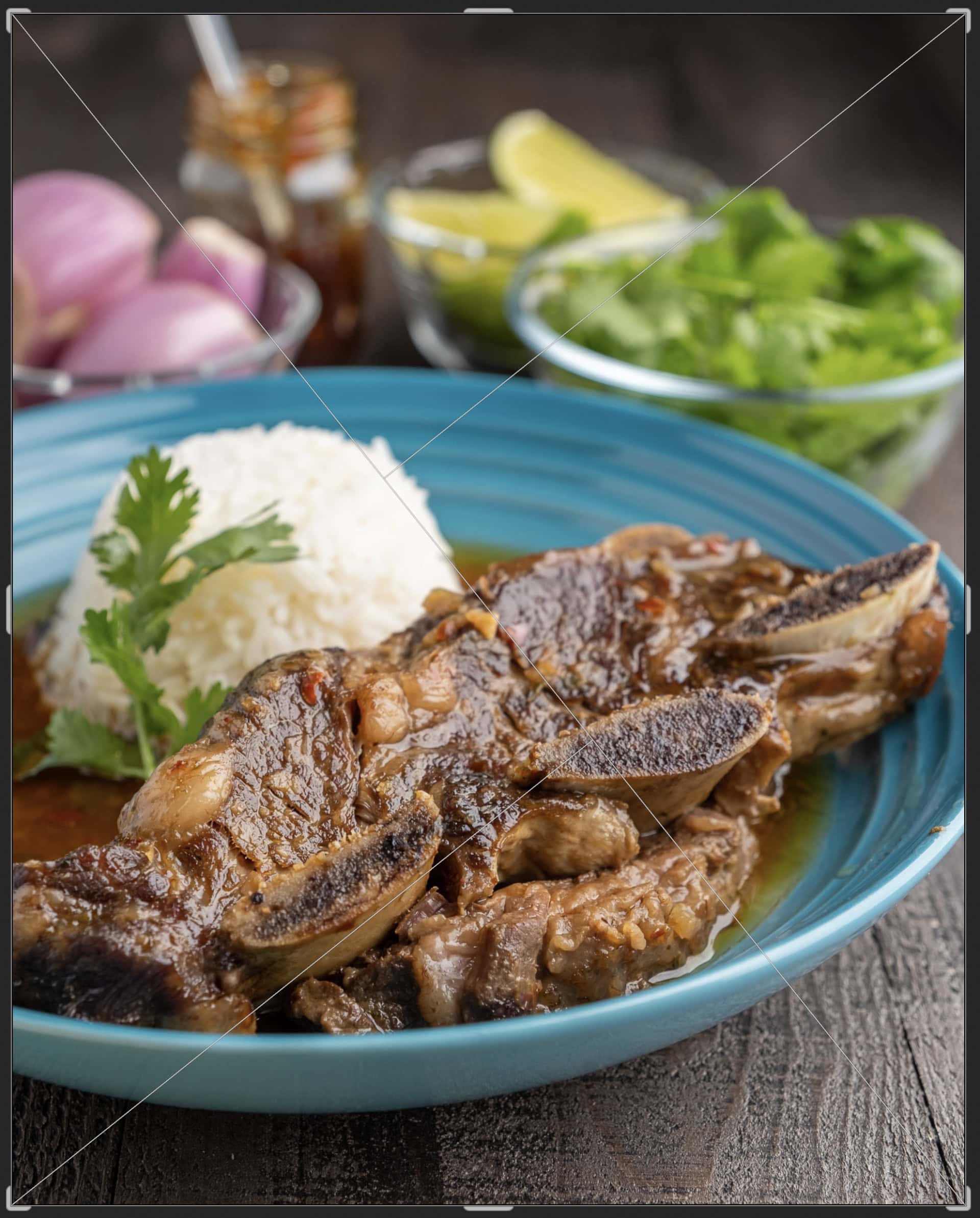
Leading lines draw the eye to the subject of a picture. They're great for hero shots to focus viewers on the main subject. They're a good use for props in a food photo, like spoons or napkins, to subtly point towards the subject.
While we're discussing lines, let's talk about diagonal lines. Diagonal lines add action to a shot, especially when they go through one of the points of the rule of thirds. I arrange my food in a diagonal, or at least sprinkle my garnishes in a line to bring the hint of a line to the picture.
Patterns and Textures
- Food is excellent for patterns - Play up the repetition
- The Rule of Odds - Trios in triangles
Food, like most natural products, has a lot of repeating patterns. Patterns draw the eye, so take advantage of patterns when you have them. I'll often use a close-up shot to emphasize texture, showing the complexity in the speckled skin of heirloom beans or the juicy vesicles in a slice of lemon.
The Rule of Odds
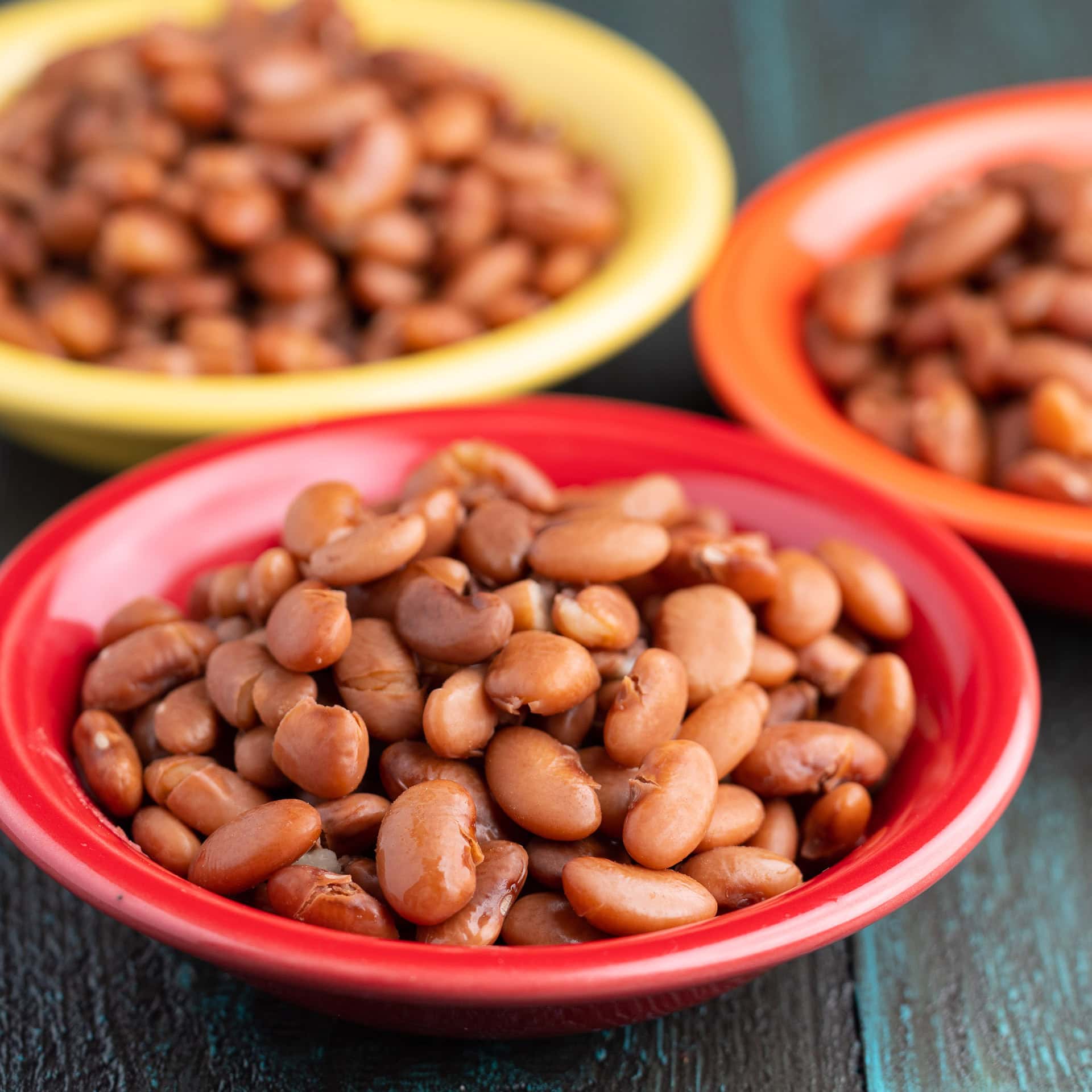
If you have more than one of something, use an odd number. Keeping things unbalanced makes for a better picture: one chicken breast, three ramekins, or five deviled eggs. In particular, I like using three things in a triangle, with the hero set in the eye of a golden spiral. The above five things usually get to "lots," where the repeating pattern matters more than the individual items.
Simplify
For the Hero Shot especially: what is the star of the show? What are we trying to show off, and can we make it more the focus of the shot?
Border patrol: make sure things aren't peeking in from the edges. Watch the corners, especially in documentary or street food photography, and make sure you're taking the shot you think you are. (Modern editing tools like Content-aware healing brushes can clean this up after the fact, but it's better if you catch it in the first place.)
Negative space: Empty space in a photo can be a good thing, especially if we need to add text. (Think of a magazine cover where they need room for the masthead and an articles list.
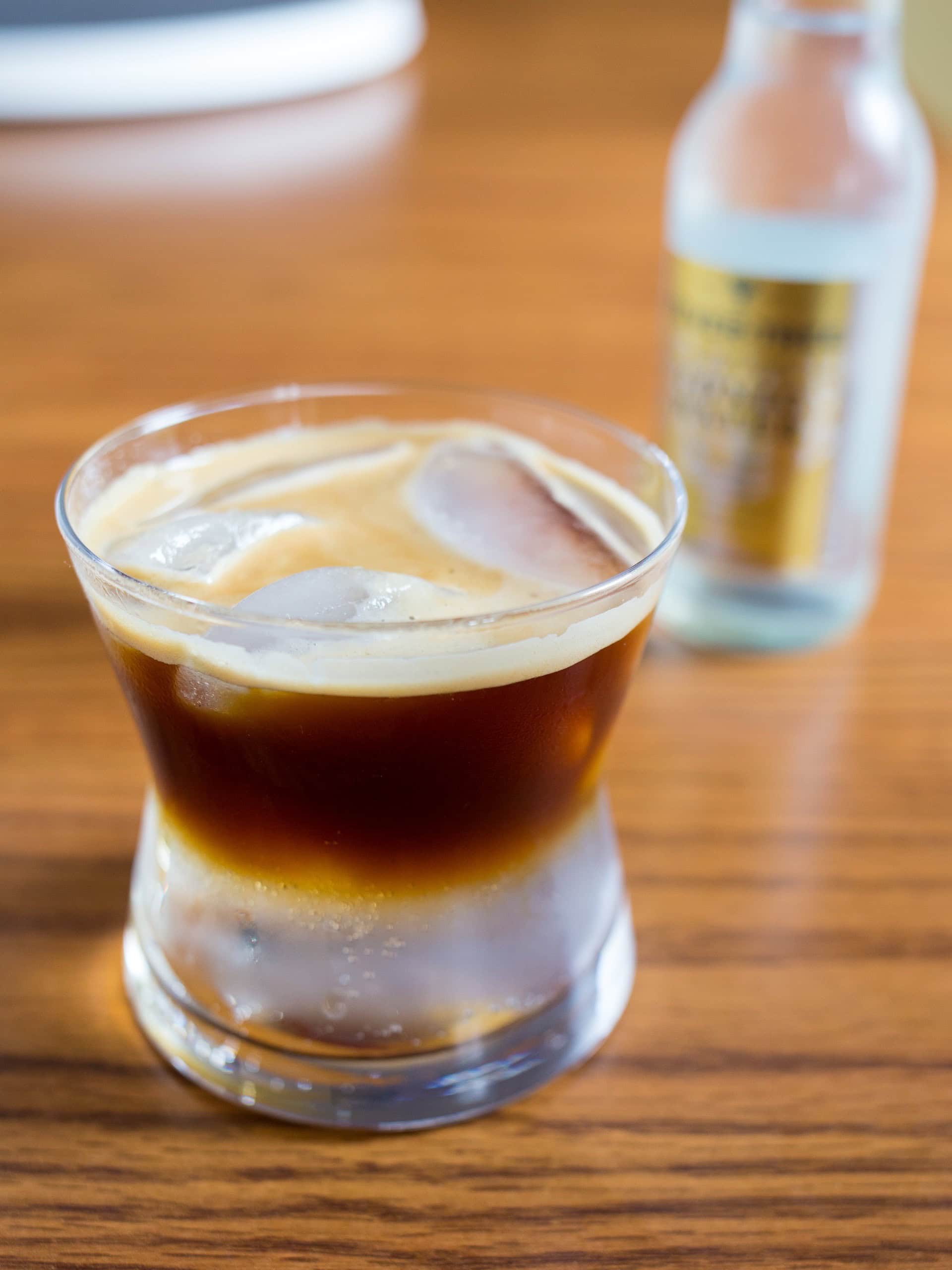
This picture is an example of what not to do - I left a bunch of (unintentional) empty space in the top left of the frame…except for the lazy Susan that a border patrol should have caught.
Angle of view
Flat lay vs. side on vs. 45° angle
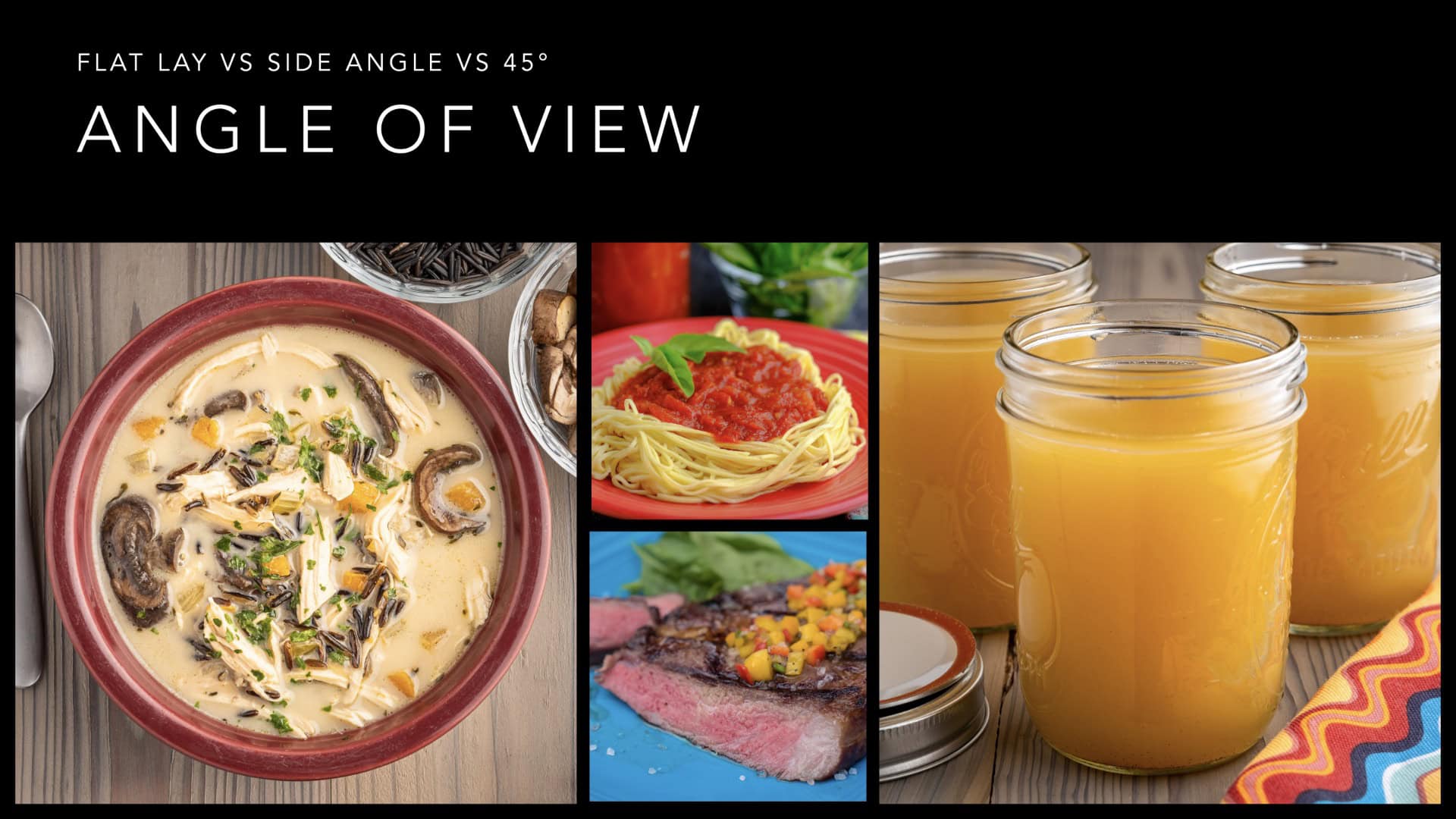
Where should the camera be when we take a picture? It depends. It's a style thing for some people - all their pictures are flat lays - but I let the food tell me where the camera should go.
A bowl of chili looks great from straight above. I shoot from the side to emphasize the height of a slice of cheesecake. That said, most of my shots are from about a 45° angle, showing the top and side of the food in the photo. (Think of a thick steak where we want to show the crosshatch of grill marks on the top and the medium-rare interior on the inside.)
How do I figure out what angle to use? I don't take one shot, and move around, so I have options once I get into my photo editing software. I once read about a photographer who took a picture everywhere between 0° and 90° to ensure they got the right angle. That seems like overkill, but I can understand the thinking behind it. Don't be satisfied with the first picture you take, and keep looking at the food from different angles.
The Human Element
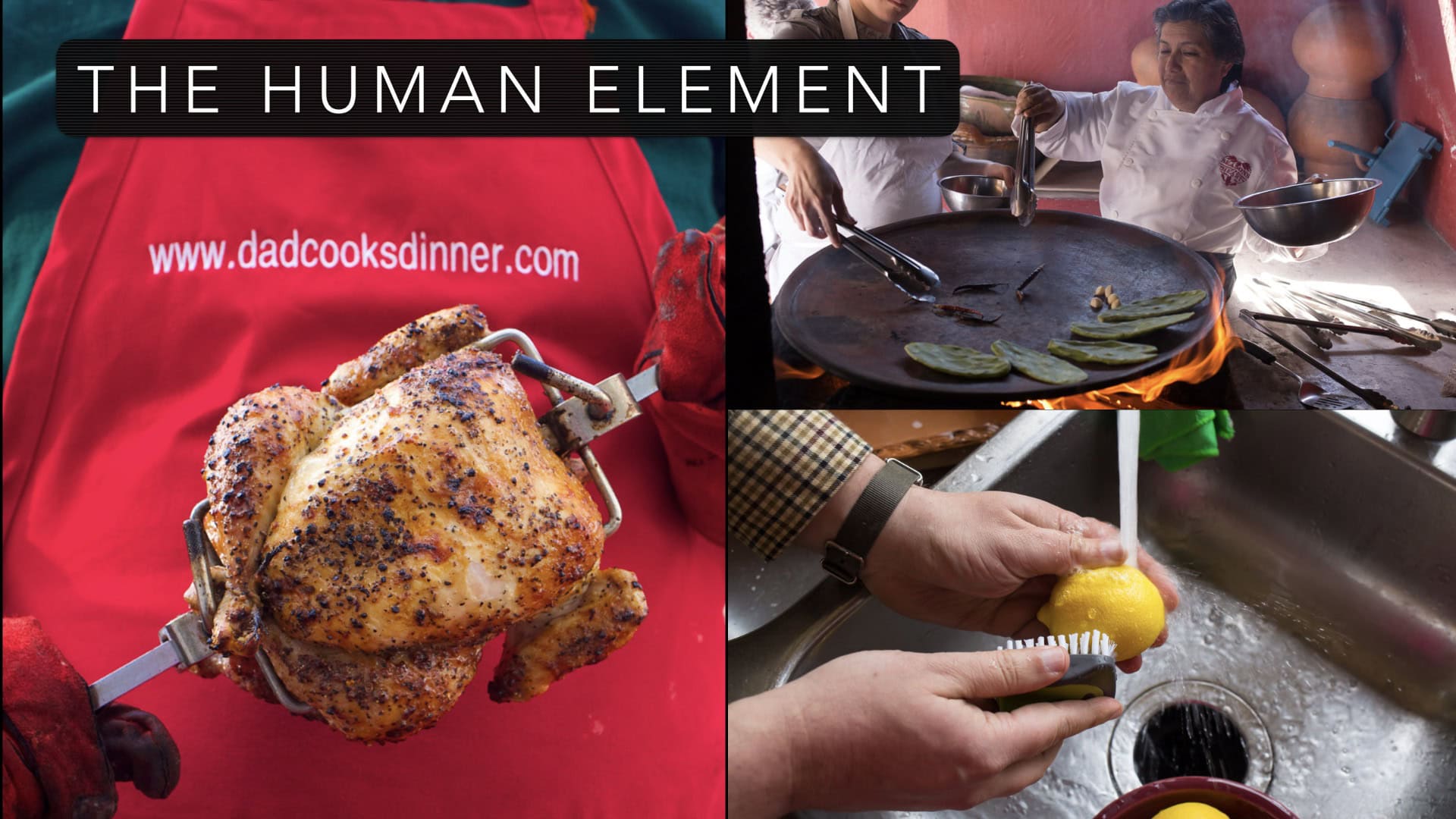
We love seeing people in photos - it helps us see ourselves in the story. Think of hands working on the food. Look for tossing, slicing, or sprinkling action if you can get it. These all put a person into the picture and add to the photo's story.
(There's a reason the "cupped hands holding a piece of food" shot was so popular it became a cliche - it works!)
Know the rules to break the rules
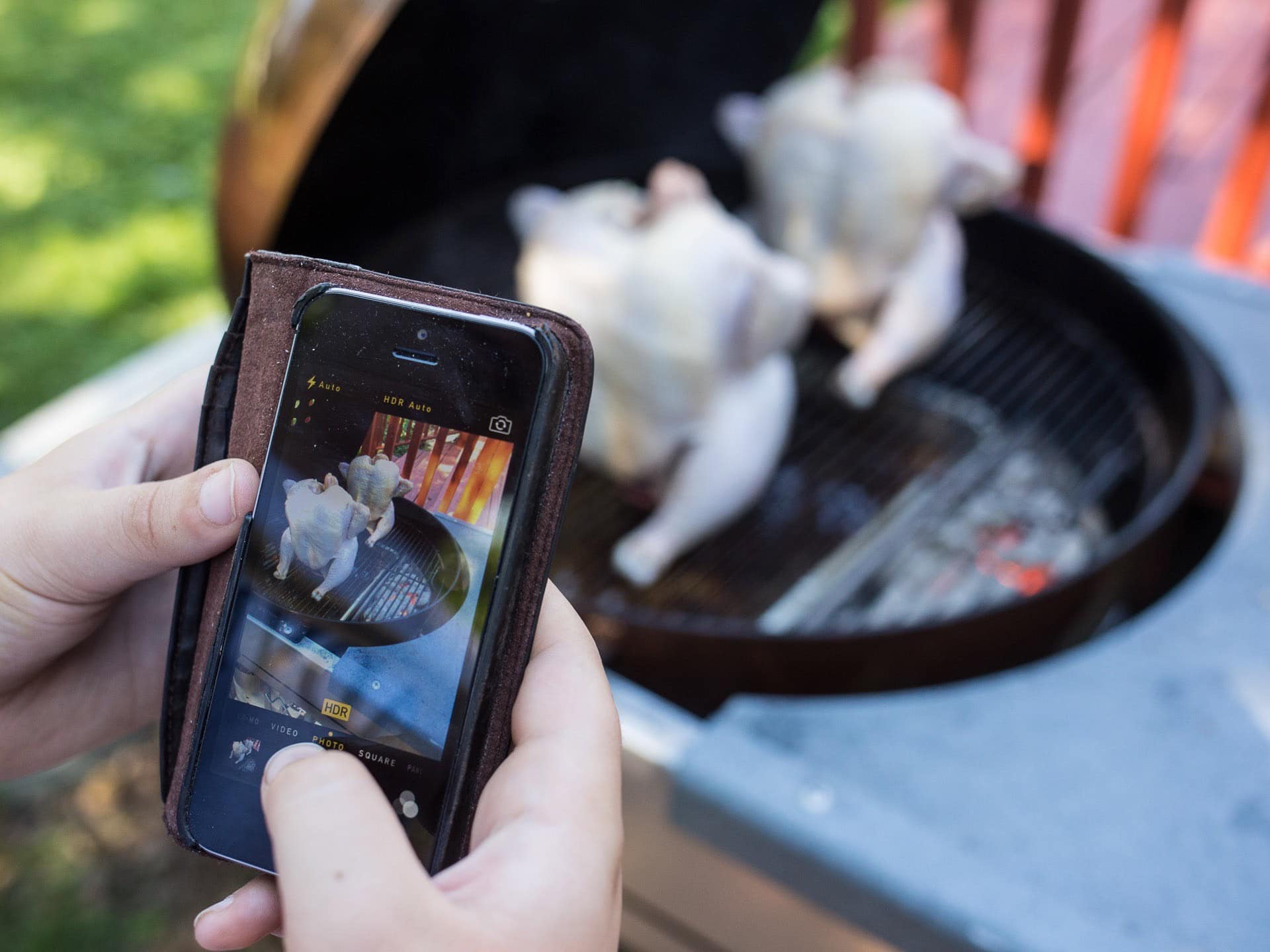
Learn these rules and use them. But:
- Not all at once, and
- Break the rules when they are not working for you!
When you're learning, the rules are important. There's a reason they are rules - they help make good pictures. The rules can build on each other but don't expect to use all of them in every photo. My photography style is based on the rules I follow and those I don't.
Some of these rules will work better for you than others. I'm always breaking the rule of thirds because I mostly shoot Hero shots for my recipes. I want it big, bold, and right in the center so that when Google takes my shot and crops it into a square, I don't lose the hero I want you to see. (Google! Shakes fist).


Leave a Reply